

According to 2025 surveys, approximately 46-49% of Americans report having personally experienced the effects of climate change—extreme heat, wildfires, floods, droughts, and other climate-related impacts.
It is hardly surprising that more than 70% of Americans believe climate change is human-caused and support climate policy. The challenge—and opportunity—lies in using narrative strategy to sustain this supermajority.
Narrative strategy works by activating values and reaching the right audiences with the right stories at a scale that can shift public narratives. Understanding who you’re reaching—their values, motivations, and media habits—can transform storytelling into genuine connection.
The Psychological Determinants of Audience Action
Moving audiences from passive viewing to active engagement is driven by the following factors:
- Emotions—stories evoke the senses and feelings that create connection
- A sense of agency—self-efficacy and the belief one’s actions matter
- Knowing how to take action—clear pathways for real-world participation
- Connecting to hope in community—a sense of belonging and mutual care
How Audience Segmentation Works
Audience segmentation is traditionally based on demographic information, including age, gender, and geographic information. For climate storytellers, focusing on values and cultures is a different and useful way to think about audience segmentation.
Harmony Labs is a nonprofit media research lab on a mission to research and reshape society’s relationship with media, using science, data, and creativity. Through the Narrative Observatory, they deliver audience-based insights, narrative and network analysis, and empirical validation of cultural strategy and content—all derived from the actual behavior of real people and true.
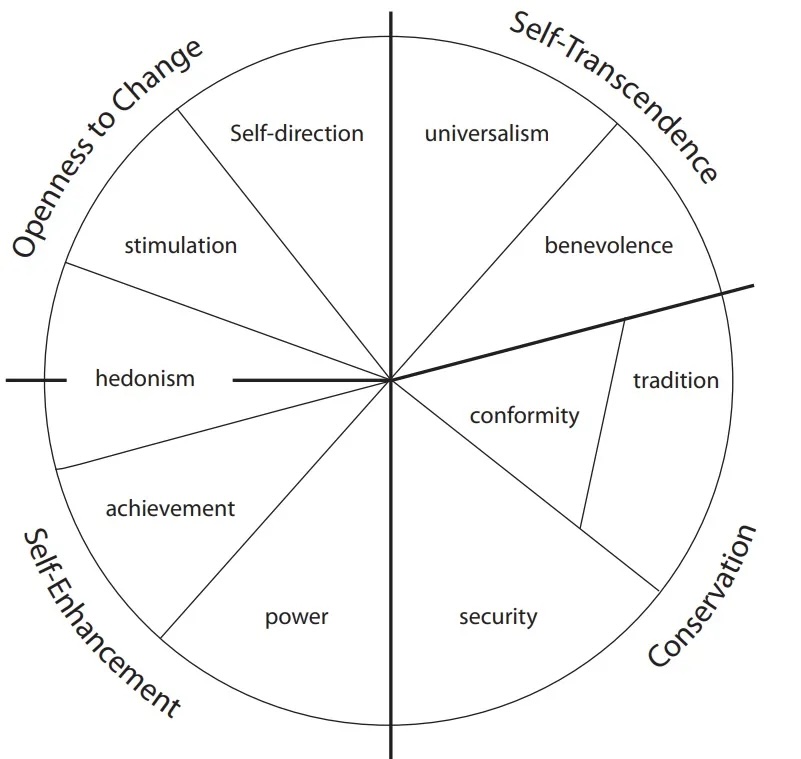
Harmony Labs’ project, “How to Reach New Climate Audiences” (in partnership with Earth Alliance), is a framework that maps audiences according to Shalom Schwartz’s Theory of Basic Human Values, using cross-cultural psychology and universal values to understand audience distinctiveness in media selection.
The Theory of Basic Human Values: A Theory of Cross-Cultural Psychology and Universal Values
Those values are: universalism, benevolence, conformity, security, tradition, self direction, stimulation, pleasure, achievement and power.
Harmony Labs identifies four core audiences around evenly distributed clusters of values:
- Community – believes collective solutions can solve complex systemic problems
- Autonomy – believes there’s no one way to succeed, so freedom and fun are paramount
- Order – believes playing by the rules is the key to success
- Authority – believes strong leadership and hard work are necessities
These four core audiences are oriented along two values axes:
- Strive & Create – forward-looking; change-oriented
- Protect & Preserve – stability-seeking; tradition-oriented
The Four Values-Based Audiences
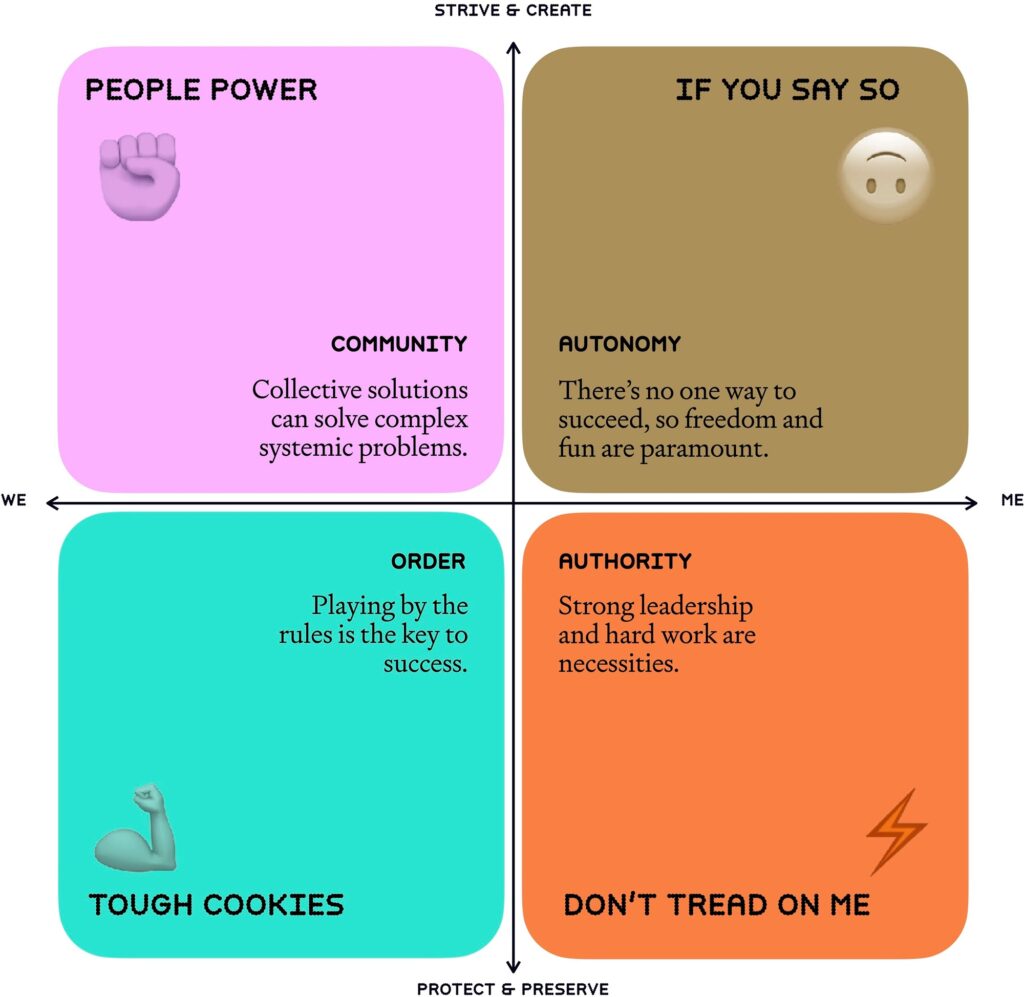
Core and bridge audiences. Between the four core audiences are zones that represent opportunities for bridges or hinges—where different core audiences share values. These bridge zones present strategic openings for narratives that can reach across traditional audience boundaries.
On Harmony Labs’ website you can explore the media life of each audience zone to understand the cultural worlds they inhabit and consider how they think about climate, the possibility of change, the future and participation. Explore the work for New Climate Audiences on Harmony Labs’ website and think about how it might work with your story. If it resonates, share it with your creative team, marketing department, and impact partners.
Applying Audience Insight To Climate Storytelling
Audiences are made up of unique individuals. This framework offers a way to try a different approach to audience engagement. This tool and the accompanying research, along with other studies, can expand your audience reach; it provides examples of real-life characters and behavior patterns, which can inform how we imagine our viewers and how they see themselves in the characters we present in our stories.
How to Begin
- Identify your core and bridge audiences.
- Use audience segmentation models for character building as well as audience information. Which values are being reinforced or challenged? Who has moral authority, lived credibility, or symbolic power within each audience?
- Think expansively about your audience, i.e. geographic, multicultural, intergenerational and youth, occupations, special interests.
- What new and different groups emerge with the tool that may become impact partners in your marketing?
What Does Success Look Like?
- Your story reaches engagement with new audiences.
- Characters and storylines resonate with the values of your target audience zones.
- Marketing strategies align with where your audiences actually gather in media culture.
- Impact partnerships connect with authentic messengers within each audience segment.
- Audiences move from passive viewing to active engagement.
- Your climate narrative strategy activates shared values at a scale that can shift public narratives.